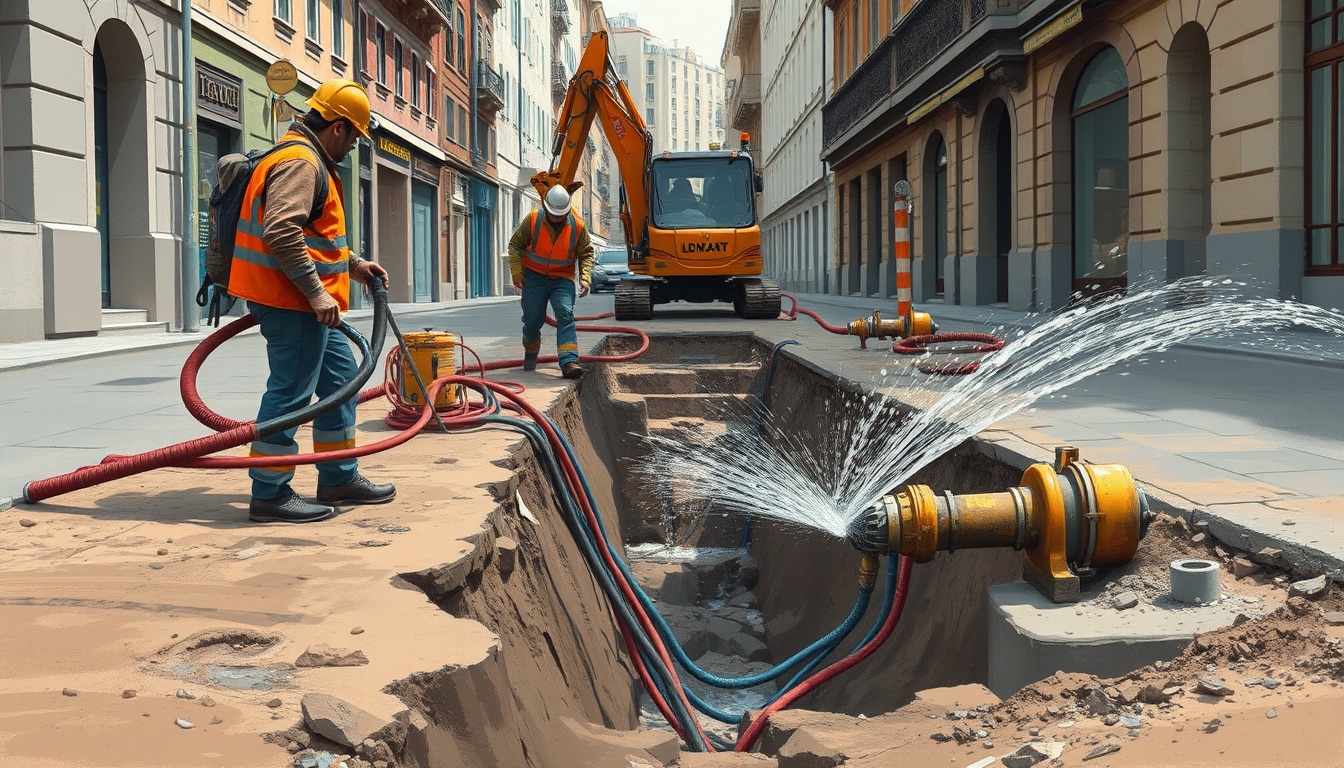
The Common Ground Alliance (CGA) has published a set of estimates, broken down by US state, covering the economic toll of damage to underground infrastructure. Trenchless Technology reports that the release complements the alliance's nationwide study "Between the Lines: The True Cost of Damage to America's Buried Utilities". CGA put the national figure at USD 83.2 billion.
A narrow slice of the real bill
Barely a twentieth of what utility damage costs the country goes to fixing it, the study indicates. Direct repair work accounts for just 5.9 percent. Interrupted operations, emergency response, property losses, effects on communities and other consequences make up the rest.
To arrive at the USD 83.2 billion national value, the alliance ran a model against records sent to its Damage Information Reporting Tool, or DIRT. That approach is meant to capture damage that never gets reported. The fresh state figures take a different route: they draw straight on 2025 DIRT submissions from states that filed more than 25 incidents.
Reading the state numbers
Submissions to DIRT are voluntary, CGA points out, and reporting obligations vary across states, so the state-level values should be treated as a careful lower bound.
CGA President and CEO Sarah K. Magruder Lyle put the national burden at USD 83.2 billion and called that figure the alliance's best estimate of how wide the problem really is. The state totals, she added, "are a floor, not a ceiling" - they count only what was reported during 2025, while the real bill in most states runs higher.
How the model was built
The framework is quantitative. It merges 2025 DIRT data with confidential interviews of alliance members and industry executives, publicly reported incidents and government records. Utility category, incident severity and type of area drive the cost modelling, and results are then aggregated over five dimensions of impact. Submissions from 46 states plus the District of Columbia fed the state estimates; any state reporting fewer than 25 damages was left out.
CGA argues that damage to buried networks is largely preventable and that turning the rising trend around calls for systemic change. It is urging contractors, network operators, notification centres, locators and regulators to adopt its best-practice guidance.